Mandates Push Back. Food Pulls In. How London Companies Are Using Meals to Drive Attendance.
Mandates push back. Food pulls in. Here's the practical playbook for using meal programmes to bring hybrid teams back to the office in London.

The return-to-office problem is not, at its core, a policy problem. It's a motivation problem.
Companies that have tried to solve it with mandates have discovered — often in the pages of the Financial Times — that employees push back, productivity culture sours, and the best performers are frequently the first to find alternative employment. The mandate approach treats the question "why would I bother commuting?" as one that doesn't deserve an answer. Employees, reasonably, disagree.
The companies making genuine progress on hybrid attendance in London in 2026 are the ones treating the question as one worth answering — and using food as one of the most effective, most immediate, and most measurable answers available.
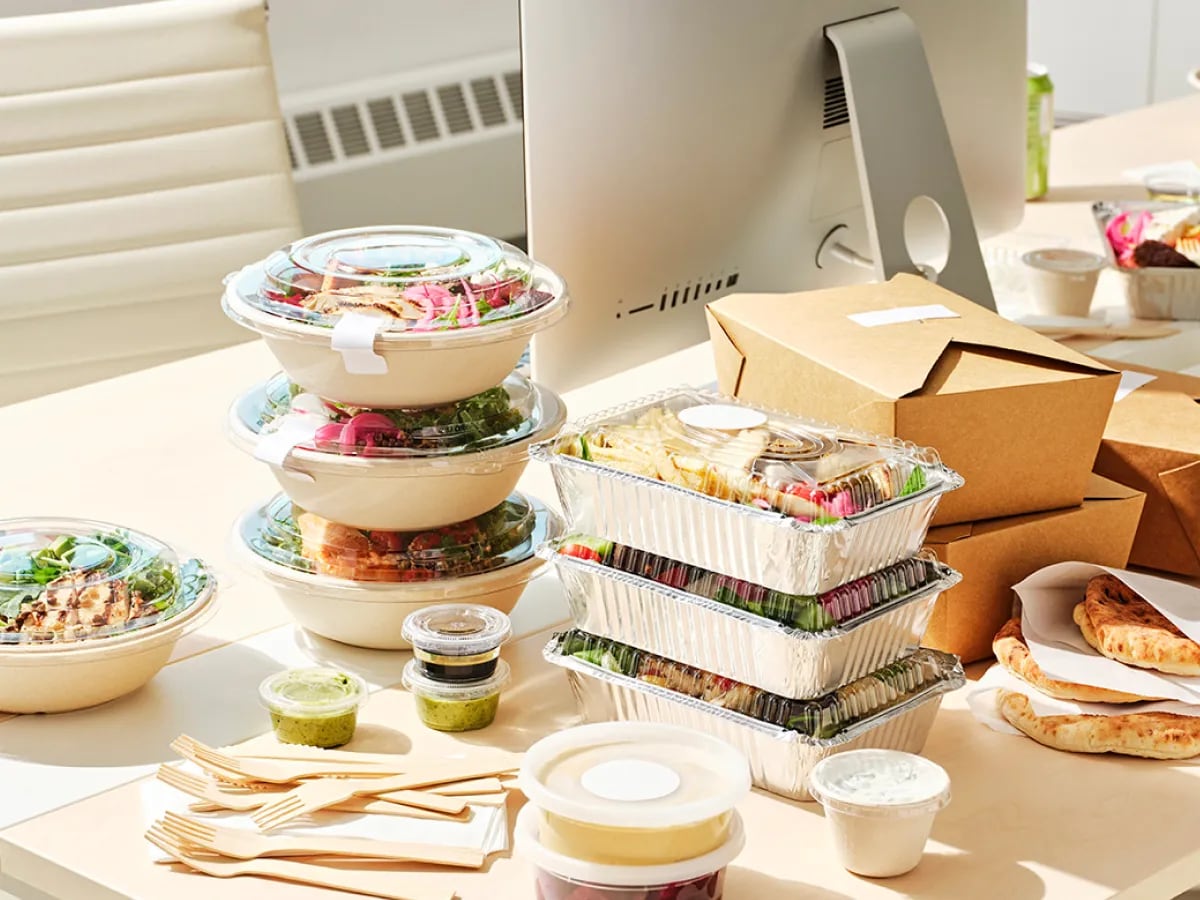
Why food works when policies don't
Food works as an attendance driver for reasons that are psychological as much as practical.
A mandate creates obligation. Obligation generates resistance, even among employees who would have come in anyway. A good meal creates anticipation. Anticipation generates a positive motivation to make a decision that was already marginal — and tips it in the direction you want.
There is also a social element that is difficult to replicate with other perks. A free gym membership is a personal benefit consumed alone. A team lunch on Thursday is a shared experience — something to look forward to, something people talk about during the week, something that makes the in-office day feel different from the home day in a way that matters.
The data is consistent on this. ezCater's 2026 Future of Workplace Experience Report puts food perks among the top draws for on-site attendance, alongside flexible hours and holiday allowance, and finds Gen Z workers 48% more likely than older colleagues to say food perks would bring them in. Its 2025 decision-maker survey found 78% agree that providing food encourages in-person work, and its 2025 Lunch Report found 75% of hybrid employees would work on site more often if lunch were provided.
DoorDash's analysis of 2025 orders across 700+ companies found Thursday workplace orders running 20% higher than Monday, with large team-sized orders growing 30% faster than regular ordering year on year. Both are US datasets. What they establish is the pattern, not the UK number.
The London context
London has specific factors that make the food-attendance link particularly relevant.
The average London commute for a Central London office worker — from zone 2-4, by Tube — is approximately 45 minutes each way. On a day when the weather is poor, the diary is light, and there's nothing specifically drawing someone in, that 90-minute commute can feel impossible to justify.
Food tips the calculation. Not because a £12 lunch is worth £90 of commuting cost and 90 minutes of time — it isn't, on a pure financial basis. But because it creates a specific, anticipated positive event in the middle of the day, which transforms the in-office day from "generic work" to "the day I go in and we all eat together."
This effect is strongest when the food is genuinely good. A shared platter of sandwiches from a generic supplier does not produce the same effect as knowing that on Thursday you can order exactly what you want from Sticks'n'Sushi or Wagamama and it will arrive at your desk labelled with your name. The quality of the choice matters. That's why the shift to individual-choice group ordering — which Ordit's group ordering enables — generates stronger attendance effects than traditional office catering.
The practical playbook: four models that work
Based on what Ordit observes across 500+ London client companies, the meal programmes that most effectively drive attendance share a few structural features. Here are four specific models, each suited to a different type of organisation.
Model 1: The Thursday Anchor
Pick one day. Make it the best day to be in the office. Run a recurring group order every Thursday at 1pm. Let every team member order their own meal from the restaurants chosen for that day. Set a per-person budget cap (e.g., £12). Do this every week, consistently, without exception.
The mechanism: employees know that Thursday is the day. It becomes a social anchor. Colleagues ask each other on Wednesday: "you coming in tomorrow?" The answer starts as "yes because of the lunch" and gradually becomes "yes because that's when everyone's in."
Best for: Tech companies, professional services, media. Organisations with a collaborative culture that wants to reinforce specific days.
Model 2: The Daily Individual Perk
Offer a daily individual meal budget (e.g., £10–15 per person) that's active on any day the employee is registered as in-office. No group order — just individual on-demand ordering throughout the day. Flexible, employee-led, and works for organisations with varied schedules.
The mechanism: the perk is associated with being in the office. Employees who are deciding whether to commute know that a free lunch from 300+ restaurants is waiting for them if they do. On the days they work from home, the budget is inactive — making the distinction clear without being punitive.
Best for: Financial services, law firms, consulting. Organisations with irregular schedules and high earner demographics who value choice over social ritual.
Model 3: The Event Calendar
No recurring programme. Instead, food is scheduled around specific high-value in-office events: all-hands meetings, quarterly reviews, onboarding weeks, team milestones. Catered group meals are the signal that this is a day worth being in for.
The mechanism: employees learn to associate certain calendar events with both professional value and good food. The food becomes part of the event identity. "The quarterly review" becomes "the quarterly review where we always eat well."
Best for: Professional services firms, organisations with event-led culture, companies that want to drive attendance at specific moments rather than building a weekly habit.
Model 4: The New Joiner Anchor
Use food specifically to accelerate new joiner integration. New employees get a more generous individual meal budget for their first 90 days (e.g., £15/day vs £10/day for existing employees). Ordit's SFTP sync can automatically assign the "new joiner" budget rule based on start date and downgrade it after 90 days without any manual administration.
The mechanism: new joiners feel the perk distinctly. It creates an immediate positive association with in-office days at a moment when the habit of coming in is still being formed. It also gives them a natural conversation opener ("have you tried ordering from X on Ordit?") in the first weeks when building relationships is hardest.
Best for: High-growth companies with frequent new joiners, organisations with hybrid onboarding challenges, companies investing in culture at the point of hire.
What doesn't work
For completeness: the meal programmes that fail to drive attendance are the ones that don't feel meaningfully different from what an employee could organise themselves.
A monthly food allowance loaded onto a corporate card — usable anywhere, any day, for any purpose — is a cash benefit. Employees appreciate cash benefits. But cash benefits don't create attendance motivation because they don't specifically reward in-office presence. They just make the office experience marginally more affordable.
Similarly, a flat daily budget that doesn't activate or deactivate based on where the employee is working doesn't distinguish in-office days from home days. The perk is there regardless, so it isn't doing any motivational work on the days you need it most.
The programmes that work are the ones where the employee consciously associates "being in the office" with "getting good food." That association needs to be direct and repeated to build the habit.
Measuring the effect
Unlike many HR interventions, the attendance effect of a meal programme is measurable with reasonable precision.
Ordit's Admin Portal shows order data by date and location. If an organisation tracks office badge swipes or desk bookings alongside meal orders, the correlation between ordering days and attendance days can be quantified directly, controlling for day of week. Capture four weeks of badge data before launch so there is a baseline to compare against. Any supplier quoting you an attendance uplift percentage without access to your badge data is guessing.
That data is useful not just for validating the programme internally — it's useful for presenting the ROI to Finance and to leadership, at a time when employee benefit spend is under closer scrutiny than it's been in years.
Starting the conversation
The conversation about food and attendance is most productive when it involves HR, Workplace, and Finance at the same time. HR brings the culture and retention framing. Finance brings the cost scrutiny. Workplace brings the logistics and vendor management.
Ordit's team works with all three functions. The setup conversation typically covers: what days and locations you want to activate the programme, what budget rules make sense for your team structure, how the integration with your HR and finance systems works, and what the expected cost looks like for the first three months.
Most London clients are live within two weeks of that first conversation.
Ready to feed your team properly?
Join hundreds of London offices already using Ordit for individual meals, group orders, and catering.