The Shared Office Platter Is Dying. Here's What Team Lunch Looks Like Now.
The shared office platter is dying. London teams are switching to group orders where each person picks their own meal — all delivered together.
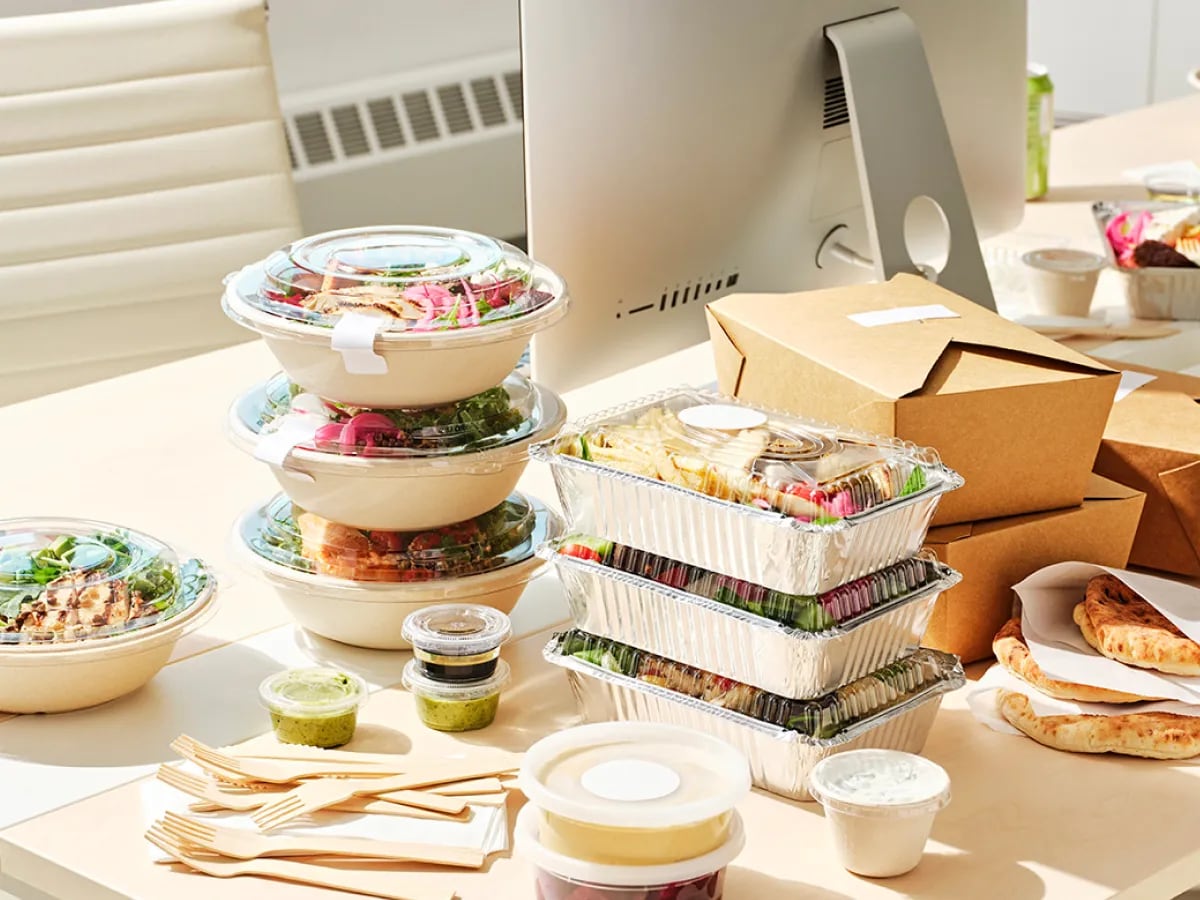
You've been in this meeting. Someone is tasked with ordering lunch for the team. They pick a restaurant. They pick a menu. Twenty minutes later, there are sandwiches from one place, a few people didn't want sandwiches, someone is quietly eating crisps from their desk because there was no vegetarian option, and whoever ordered is fielding messages about dietary requirements they weren't told about until after the food arrived.
The shared office platter — one restaurant, one menu, something for everyone that ends up being exactly right for nobody — has been a fixture of London office life for decades. It persists largely out of habit and because, until recently, it was the only model anyone offered.
That's no longer true.
How "group ordering" became something different
The phrase "group order" used to mean one thing: a single order from a single restaurant, large enough to feed a group, divided amongst people who had varying degrees of enthusiasm for the choice made on their behalf.
Over the past few years, a different model has emerged — one that keeps the social and logistical structure of a group lunch (everyone eats together, one delivery, one invoice) while eliminating the core compromise (everyone gets whatever was chosen for them).
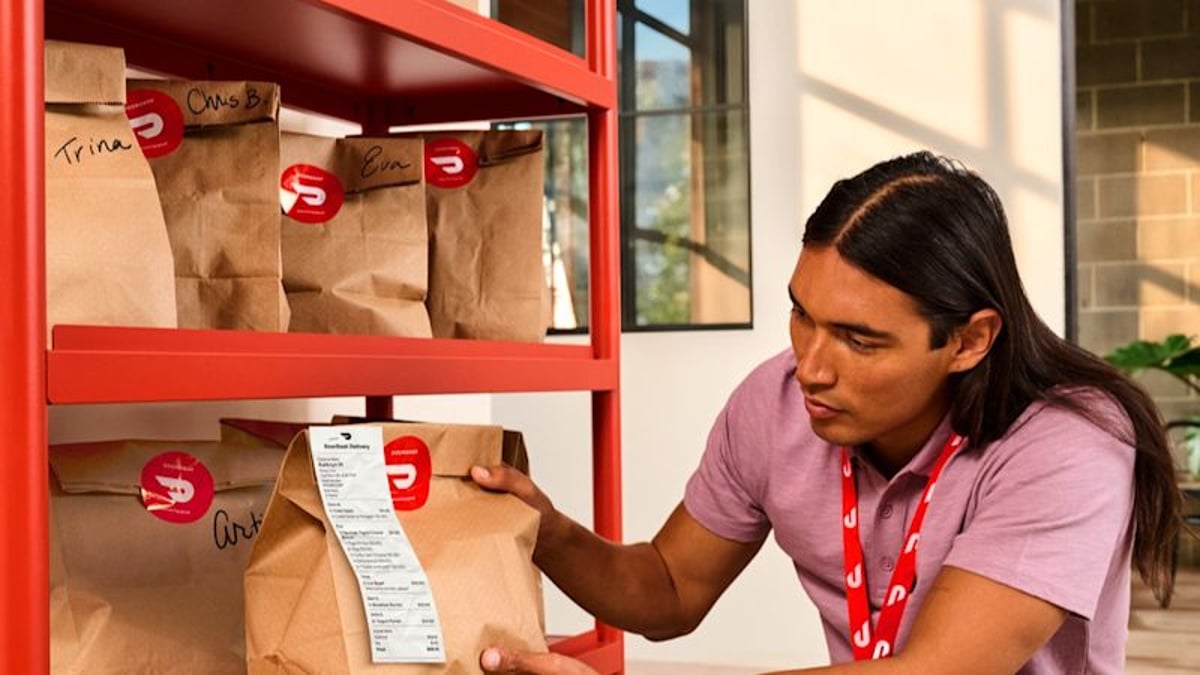
The new model works like this: a group order is placed. Everyone on the team is notified and signs in to their own account, where the restaurants chosen for that order are ready to browse. They pick exactly what they want, using the allergen information on the menu. They confirm. At the agreed delivery time, a single delivery arrives with every meal, individually labelled by name.
No compromise. No one eating a meal they didn't want. No dietary requirements missed. Just a team lunch where everyone is actually happy with their food.
DoorDash's 2026 Workplace Meal Trends Report found that large, team-sized orders grew 30% faster than regular ordering year-over-year — a clear signal that group meals are becoming a more intentional, regular part of how London businesses structure in-office days. The expectation driving that growth isn't "someone will order pizza." It's "everyone will get what they actually want."
The social effect is measurable too. ezCater's 2026 Future of Workplace Experience Report found 69% of workers agree that food-focused work events help them feel more connected to colleagues, 69% say socialising during the workday makes them more productive, and 60% say they are more likely to ask a work favour of someone they have shared a meal with. That last one is the quiet argument for team lunch: it is how cross-team requests stop being awkward.
Why individual choice matters more than it used to
London office teams are more diverse than they've ever been — in dietary requirements, cultural food preferences, and health priorities. A team of 20 people in a City bank or a Shoreditch tech company will likely include people who are vegetarian, halal, gluten-intolerant, pescatarian, keto, or simply very specific about what they like to eat.
A shared platter from one restaurant cannot serve all of those needs well. It can accommodate some dietary restrictions and leave everyone else with a generic option — but the signal it sends is not a particularly thoughtful one.
There's also a generational expectation shift at play. Employees in their twenties and thirties who grew up with Deliveroo and Just Eat on their phones are accustomed to choosing exactly what they want, from exactly the restaurant they feel like that day, and having it arrive in 30 minutes. The idea of settling for "whatever was ordered for the office" sits poorly against that baseline.
The same report found that employees who order through an employer meal programme more than once a week are 54% more likely to choose a healthier meal than those who order once a week or less. Frequency is the active ingredient, and frequency only happens when people actually want what is on offer. A rotating platter of sandwiches does not produce that habit.
What recurring group ordering looks like in practice
Ordit's recurring group orders are the London-specific version of individual-choice group ordering — built for teams that want the logistics of a group delivery without the compromise of a group menu.
Here's how it runs for a typical Friday team lunch:
On Tuesday morning, an Office Manager opens a group order for 25 people and the team is notified. Ordering stays open until Friday morning. Each person signs in to their own account, browses the restaurants chosen for that order, picks their own meal using the allergen information on the menu, and confirms. On Friday at 1pm, an Ordit rider arrives at the office with 25 individually labelled meals in insulated bags. Everything arrives at once, in the agreed 30-minute window. One invoice. One delivery fee (£15 + VAT per restaurant — at 25 people that is a single restaurant, so a single fee).
It can also run as a recurring order on a set schedule — same day, same time, as often as the team wants — set once and running automatically. Recurring group orders are designed for the team that wants a proper lunch ritual without anyone having to organise it each time.
The logistics that make it possible
The reason the shared platter persisted so long is partly that the logistics of individual-choice group delivery were genuinely difficult. Getting 25 different meals from multiple restaurants, to one address, at the same time, without anything being cold, required infrastructure that most delivery platforms weren't built to provide.
Ordit is built around it. Ordit's own electric cargo bikes — not third-party gig workers, but Ordit's own dedicated fleet — are purpose-built for batch corporate deliveries. A single cargo bike can carry 20–50 individually insulated meals, each labelled with the recipient's name, coordinated to arrive in a single 30-minute delivery window. Nothing arrives early. Nothing arrives late and cold in a separate bag 20 minutes after the rest.
The meal labelling also matters more than it sounds. In a 30-person team lunch, meals arriving in an unlabelled pile creates a small but persistent source of confusion and occasional frustration. Every meal in a group order is labelled. There is no uncertainty about whose food is whose.
The canteen comparison
It's worth being precise about how individual group ordering compares to the canteen model that many London offices still run as their default team lunch mechanism.
A traditional on-site canteen offers choice — but choice from a fixed daily menu, constrained by what the kitchen can produce at scale. An employee who wants sushi on a day the canteen is serving curry is out of luck. Ordit's group ordering model offers choice from 300+ London restaurants, every day, across every cuisine. The choice is real, not nominal.
The cafeteria also produces food waste at scale when headcounts are unpredictable (as they are in every hybrid office). Individual group ordering produces almost none, because the food that arrives is exactly the food that was ordered by the people who are actually in that day.
Making it a habit, not an event
The shift that makes the biggest difference to employee experience is moving group lunch from an occasional event to a weekly habit. Research consistently shows that regular, scheduled team meals — not just one-off catered events — are what drive the cultural and attendance effects that companies are looking for.
Ordit's recurring group orders are designed to make that easy. Set it once, and it repeats on the schedule you choose — same day, same time, same ordering window, same delivery. The team develops an expectation around it. It becomes part of the rhythm of in-office days. It gives people a reason to be in on a specific day of the week, which is one of the most reliable answers to the hybrid attendance question that any workplace team has found.
Ready to move past the shared platter?
Ordit's group ordering runs across London in EC1, EC2, EC3, EC4, E1, E14, W1, WC1, WC2, N1, NW1, SE1, and SW1. Setup takes one call. The first group order can run within a week.
Ready to feed your team properly?
Join hundreds of London offices already using Ordit for individual meals, group orders, and catering.