Group Ordering for Office Lunches: How It Works
How group ordering works for London office lunches — cutoffs, labelled delivery, recurring team lunches — and when to use it over catering or individual orders.
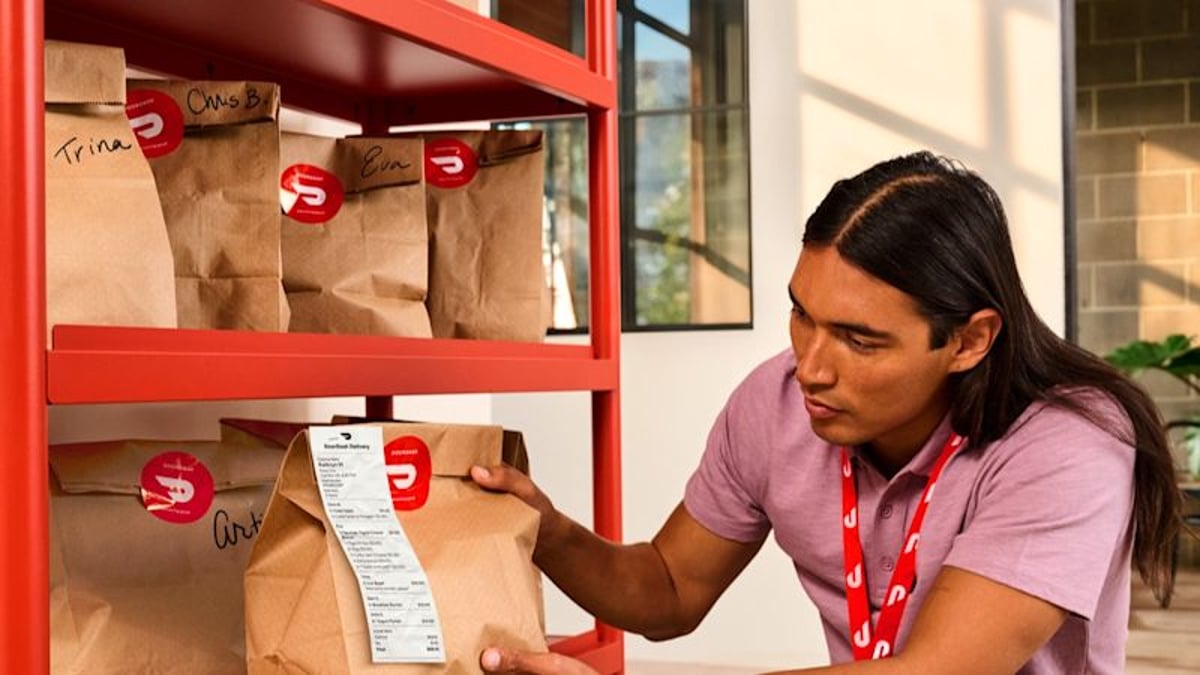
Group ordering is the format London offices reach for when they want the team eating together without the office manager becoming a lunch administrator. Everyone picks their own meal from a shared order; everything arrives together, labelled by name, in one delivery; finance sees one line item.
It sits between the other two ways offices buy food — individual on-demand ordering and full office catering — and the three get confused constantly. This guide covers how group ordering actually works, what it costs, when it is the right format, and how recurring group lunches turn it into something closer to a canteen.
How group ordering works, start to finish
The mechanics, using Ordit's Group Ordering as the example:
- An organiser opens a group order and the team is notified — everyone signs in to their own account to pick.
- Everyone picks their own meal from the chosen restaurant's menu, on web or mobile. Dietary needs solve themselves because nobody is guessing on anyone else's behalf.
- The order closes at a cutoff. For ad-hoc group orders the cutoff is 10:00am for delivery between 12:00 and 12:30 the same day.
- The restaurant prepares everything as one batch, and an electric cargo bike delivers it in a single drop to your designated point — reception, a kitchen counter, a floor drop-off.
- Every meal is labelled with the person's name. This sounds minor and is not: unlabelled group deliveries dissolve into a scrum, and the wrong person eating the gluten-free order is a genuinely bad outcome.
- One invoice line. No receipts, no who-owes-what, no expense claims — the order lands against the team's budget and expense code automatically.
The format scales naturally to around 30 meals per restaurant; larger groups split across two or more restaurants in the same delivery window, which doubles as a variety feature.
What it costs
Group ordering is priced like a normal restaurant order plus logistics: menu prices, a £15 + VAT delivery fee per order (the whole batch, not per person), and Ordit's 5% + VAT service fee on monthly spend. For a 25-person team lunch, the delivery works out at 60p a head — cheaper per person than 25 individual deliveries, and with one drop instead of a morning of lift traffic.
There are no order minimums and no lock-in, so a team can run one group lunch as a trial without committing to anything.
Group ordering vs individual ordering vs catering
The honest decision table:
| Individual ordering | Group ordering | Office catering | |
|---|---|---|---|
| Who chooses the food | Each person, any restaurant | Each person, shared restaurant(s) | The organiser |
| When it arrives | On demand, ~30 minutes | Scheduled slot, one drop | Scheduled, set up before the event |
| Format | Personal meal | Labelled individual meals | Platters, buffets, boxed meals |
| Best for | Daily meal budgets, flexible hours | Team lunches, all-hands, recurring lunch days | Meetings, events, client hospitality |
| Delivery cost | £3.75 + VAT per order | £15 + VAT per delivery, one per restaurant | £15 + VAT per order, flat |
The patterns that fit each: individual ordering is the engine of daily meal-budget programmes — people eat at different times, in different places. Office catering is for occasions where food is presented, not just delivered — boardroom lunches, events, pop-ups. Group ordering owns the middle: the team eats the same kind of occasion at the same time, but everyone still chooses their own food.
That last property is worth dwelling on. The traditional alternative — a shared platter chosen by whoever organises it — quietly serves the median palate and fails everyone at the edges. The case against it (and the data on what teams actually prefer) is made in the end of the shared platter.

Recurring group lunches
Run a group order on a schedule and it stops being an event and becomes infrastructure. On Ordit this is a recurring group order: ordering usually opens the Friday before and closes at 10:00 on the day of delivery, and everything arrives in a 30-minute slot.
The restaurant rotates — Nando's this Thursday, Farmer J next, Sticks'n'Sushi after — which is the feature a physical canteen can never offer. Typically one restaurant serves ~30 orders, extending to two or more options for bigger floors. For offices that lost their canteen to a downsize, or never had one, this is the closest replacement that requires no kitchen, no staff, and no food waste: the order count equals the meal count.
It is also the format behind the most reliable office ritual we see: the fixed weekly lunch day. Thursday group lunch, same time, rotating restaurant — attendance on that day looks after itself, which is why the format features heavily in return-to-office food strategies.
Running a good group order: five practical rules
- Fix the day and automate it. A recurring Thursday order beats an ad-hoc "should we do lunch?" every time. Set it once; the cutoff reminders do the chasing.
- Rotate cuisine deliberately. Alternate crowd-pleasers (Nando's, Five Guys) with breadth (Mildreds, HOP Vietnamese, Marugame Udon). The rotation is the retention mechanism.
- Let the cutoff do the discipline. Late additions break batch preparation. The morning-of-delivery cutoff is the entire process — resist building an exceptions channel.
- Name a drop-off point, not a person. Deliveries to "reception, marked rack" survive holidays and meetings; deliveries to "ask for Sarah" do not.
- Watch participation, not enthusiasm. If sign-ups sag, the restaurant rotation has gone stale — the data shows it weeks before anyone says it.
Where group ordering fits in a wider programme
Most London firms end up running two formats side by side: individual ordering against daily meal budgets for flexibility, plus a weekly or twice-weekly group lunch for the ritual. The two share one platform, one budget framework, one invoice — which is the practical argument for not assembling the programme from separate providers.
For the full programme design around it, see the complete guide to employee meal programmes; for the catering end of the spectrum — events, platters, pop-ups — the office catering guide covers formats and costs.
Ready to feed your team properly?
Join hundreds of London offices already using Ordit for individual meals, group orders, and catering.